Sunday Funday: I enjoyed an excursion to the Ngamba Island Sanctuary for rescued chimpanzees. (The sanctuary is on an island because chimps don't swim - and they won't be able to escape.)
During the intro briefing on the work of the sanctuary, I noticed the Disney Conservation Fund logo on the informational posters. I was so excited! Not sure on how many visits to Walt Disney World Animal Kingdom that I have made a small donation to the Fund. And now - here I was - in one of the sanctuaries where the donations are making a difference!
I had the opportunity to feed the chimps -- by throwing fruit over the eclectic fence. Wow! They could just reach up and catch the fruit with one hand.
I was so inspired by the work at the sanctuary that I "adopted" a chimpanzee born in 2001 for my husband in honor of our 24th wedding anniversary (which I missed celebrating in person while on assignment in Uganda).
I finished Jane Goodall’s
book My Life with Chimpanzees on the boat ride over to the island. She was actually slated to visit the sanctuary in just a few weeks/November. They already had on display a beautiful tribute as well as a memory book that one could sign.
On Saturday I was welcomed into a private home and taught to cook a traditional
meal (after we went shopping at the local market for ingredients).
A staple is matoke (made with bananas) - and a delicious sauce called
g-nut sauce (made with peanuts).
We have the same matoke plants in our
backyard in Florida - and I can’t wait to make matoke and g-sauce back
home!
I also need to find a recipe for the homemade pineapple/ginger/tea juice. It is made by boiling the skin of a pineapple, and adding black tea and ginger. Strain, then chill. I love how nothing goes to waste. After eating the fruit of the pineapple, even the skin can be used to make a delicious beverage.
Shopping at this vibrant market on a Saturday morning was an experience in itself. We needed to buy greens, matoke, smoked fish and some yams. With each vendor it was a bartering session to negotiate the prices.
My host family walked me through each of the steps to prepare the matoke and the g-nut sauce and the greens. We prepared the food on the front porch and cooked in the charcoal stove outside.
I was most impressed by how every single part of the banana plant was used -- the leaves are used in the cooking process, the stems are cut from the leaves (and those are later used as string or for weaving baskets) - and even the old dried up parts of the stalk were used to tie up the matoke before cooking. (In other words, parts of the plant that we will put out to be taken as yard waste all have an important role to play) Nothing went to waste - the peels could be given to animals to eat or the skin of the pineapple can be boiled to make that delicious pineapple/ginger/tea.
The other thing that was very impressive was how few ingredients were used. For the matoke -- it was the banana. That's it. It was peeled, wrapped, steamed, mushed up -- but just the banana. And the g-nut sauce was the ground peanuts (with their skins on - that's what gave the sauce its purple color) and water. When we made the sauce we added some vegetables and some smoked fish from the market. But you could enjoy that sauce with just the peanuts and the water. In either case, no spices or seasonings were used.
I suppose the moral of the story is that one can have a delicious, filling meal with few ingredients. And nothing should go to waste!
My host Dr. Edward Kaweesi and I meet on a near daily basis - but most of these meetings are not photographed. However, when we went to the new bookstore and cafe on campus - which is in the main, historic building (located very near the Social Sciences building) - I did take some pictures!
I will definitely go back to pick up some Makerere University merch -- and to enjoy another African coffee!
Cheers to the Great Lakes Center for the Study of the United States
why yes, Dr Kaweesi does have publications on sale here at the bookstore
an "African coffee" - very much like a cafe au lait/cafe con leche
The College of Humanities and Social Sciences (CHUSS) at Makerere recently published this article about our research seminar this week:
US Professor Judithanne Scourfield McLauchlan Joins Makerere to Advance Uganda–America Relational Studies
by
The Great Lakes Center for the Study of the United States at Makerere
University has welcomed Professor Judithanne Scourfield McLauchlan from
the University of South Florida , St. Petersburg Campus (USF), for a
month-long academic engagement aimed at strengthening the Center’s
research on U.S.–Uganda relations.
Professor McLauchlan, an Associate Professor of Political Science and
Director of the Center for Civic Engagement at USF, will provide
mentorship and collaboration on the Center’s flagship “Relationality
Studies” project—an interdisciplinary effort examining the historical,
political, and cultural dimensions of the U.S.–Uganda relationship. She
will also hold consultations with researchers at the Center’s office
located in the School of Social Sciences throughout October 2025.
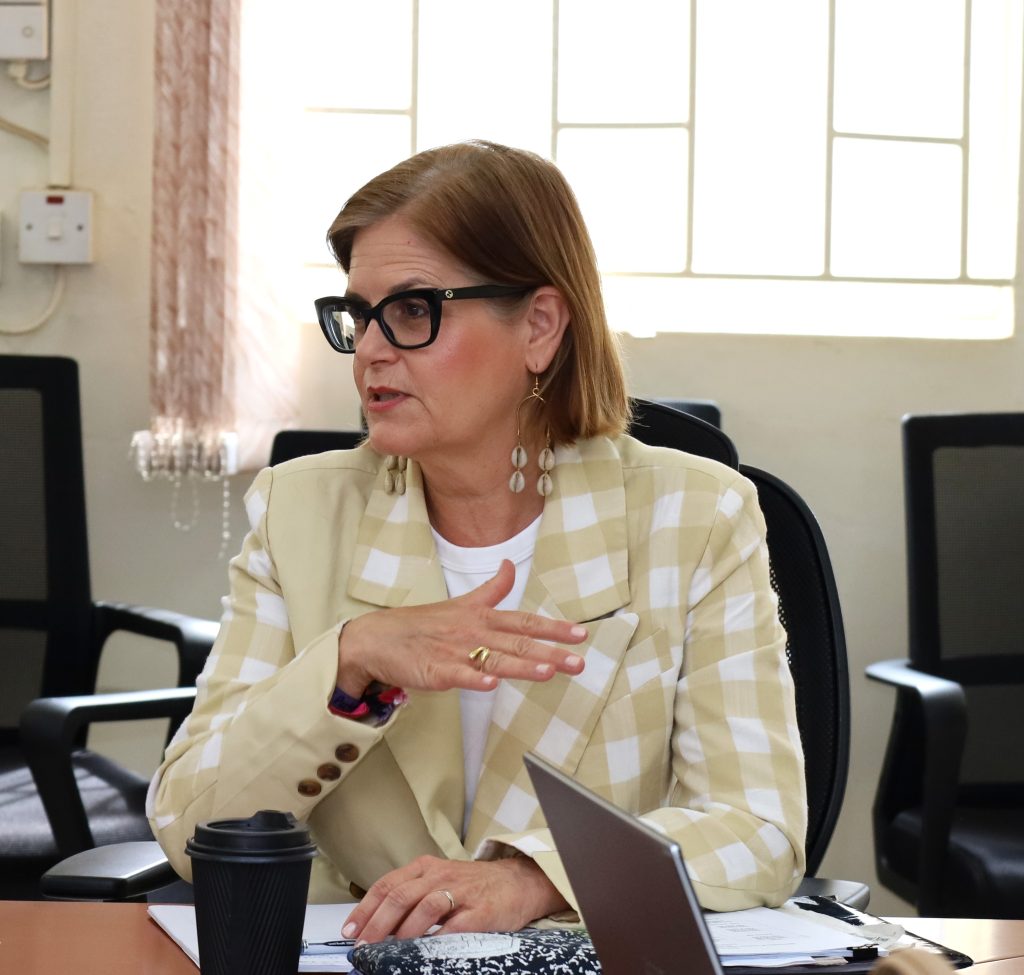
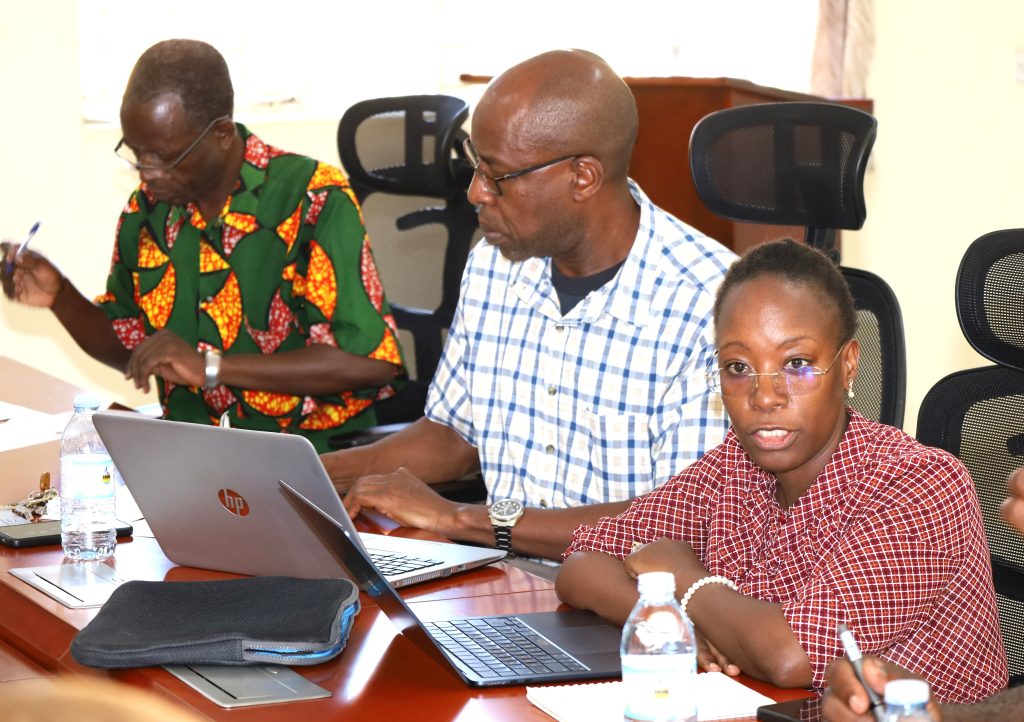
Prof. Judithanne providing feedback on the presentations
On October 8, 2025, the Center hosted a seminar to brief Professor
McLauchlan on the progress of ongoing research and to discuss avenues
for expanding the Center’s research partnerships, publications, and
international collaborations.
Building Bridges for Research Collaboration
Dr. Sylvester Kaweesi, the Principal Investigator
of the Great Lakes Center, said the workshop aimed to introduce
Professor McLauchlan to the research direction of the Center and explore
areas where her expertise could advance the ongoing studies.
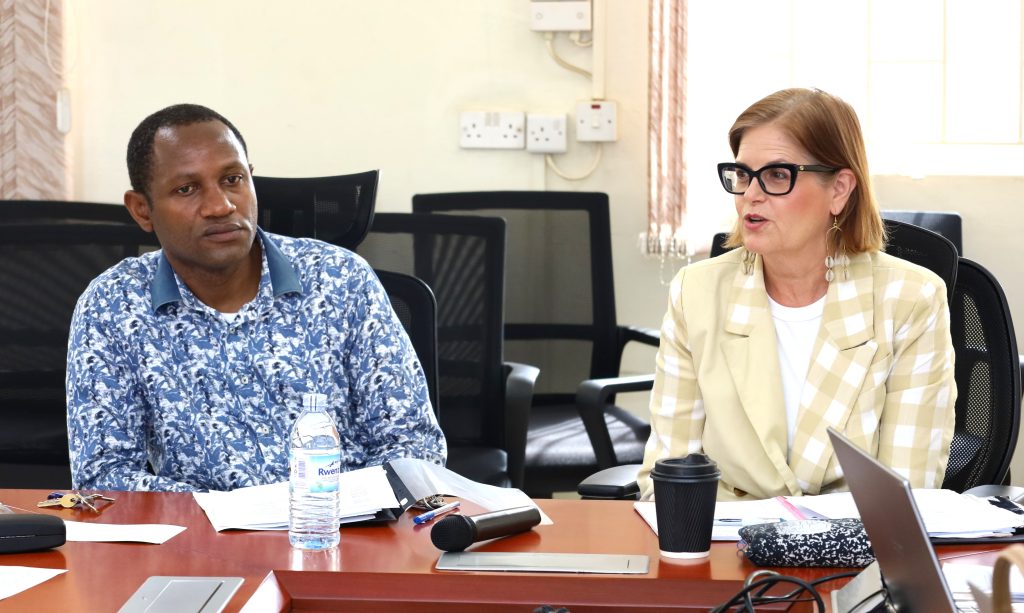
Dr. Syliverstre Kaweesi and prof. Judithanne during the seminar
“The purpose of this workshop was to bring Judithanne on board
regarding the research agenda of the Center and to identify areas where
her intervention can help expand our scope,” Dr. Kaweesi explained.
“She’s here to connect us to universities in the United States and to
help build firm collaborations for joint research grants, staff and
student exchanges.”
He noted that the researchers were midway through their data collection and had begun drafting chapters for a forthcoming book on relationality, expected to be published by August 2026.
“We expect draft chapters by mid-October, and Judithanne will help
review them and link our researchers with American scholars working on
related topics,” he added.
A Promising and Engaging Research Agenda
Reacting to the presentations, Professor McLauchlan expressed
enthusiasm about the depth and variety of work being conducted under the
Center’s Relationality Studies initiative.
“I’m delighted to be at Makerere University’s Great Lakes Center for
the Study of the United States. The research agenda is both engaging and
promising,” she said. “The breadth of topics—from countering violent
extremism and constitutionalism to programs like the Peace Corps and
Fulbright—shows the richness of U.S.–Uganda relations. I look forward to
working closely with these scholars and seeing their work published.”
She commended the researchers for their impressive progress in a
short time and reaffirmed her commitment to strengthening academic
cooperation throughout her stay.
Dr. Charlotte Mafumbo: Examining Counter-Terrorism Cooperation
Researcher Dr. Charlotte Mafumbo presented findings on counter-terrorism cooperation between Uganda and the United States, exploring both hard and soft power approaches to fighting extremism.
Her study traces the evolution of this partnership from the 1990s
through the global “War on Terror” after 9/11, to contemporary
initiatives emphasizing community engagement.
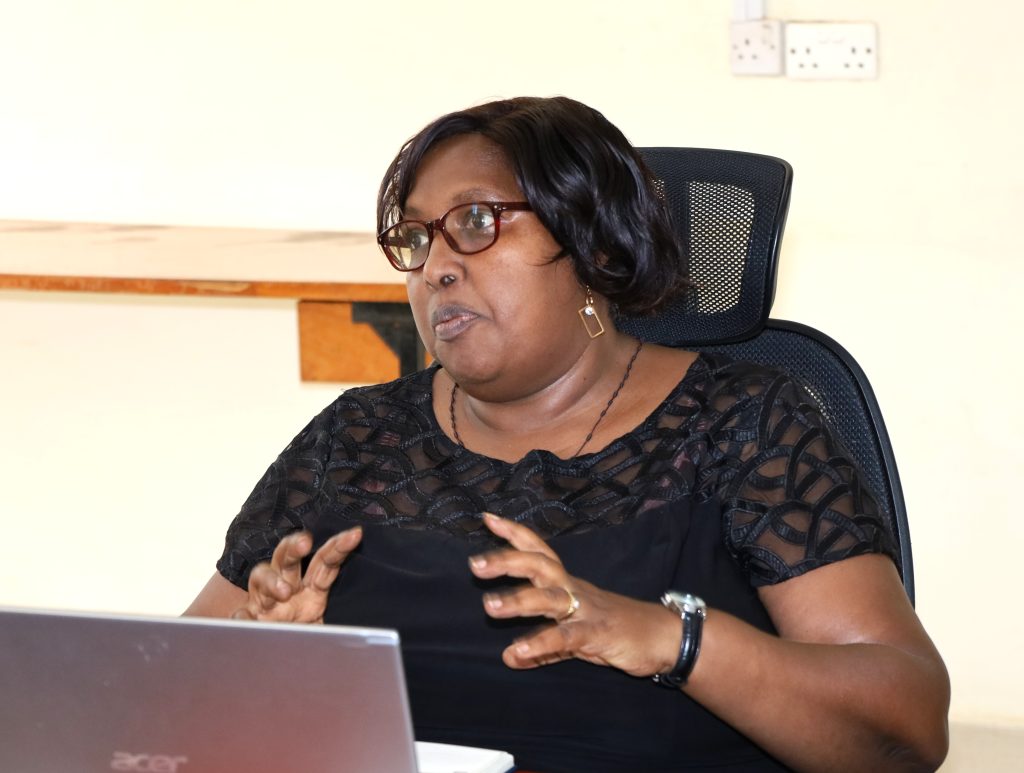
Dr. Cahrlotte Mafumbo speaking during the seminar
“Beyond military cooperation, we are now examining the soft power
approaches that emphasize education, youth skilling, interfaith
dialogue, and cultural exchanges,” Dr. Mafumbo said. “These
programs—supported by U.S. institutions—help deter radicalization
through community-led interventions, critical thinking curricula in
Madrasas, and civic education.”
She highlighted U.S.-funded grassroots programs in regions like
Kasese and Busoga, which use dialogue and youth empowerment to counter
extremist narratives. “Such initiatives address the root causes of
radicalization—poverty, unemployment, and misinformation—by giving youth
the tools to build meaningful lives,” she concluded.
Dr. Benard Luwerekera: Tracing the Peace Corps’ Legacy in Uganda
Dr. Benard Luwerekera shared his ongoing study on the Peace Corps’
role in fostering people-to-people diplomacy and cultural exchange
between Uganda and the United States.
“The Peace Corps represents one of the most enduring examples of
America’s soft power—building relationships through friendship and
service,” he said. “Volunteers have worked in education, health,
agriculture, and community development, even in hard-to-reach areas
during fragile political times.”
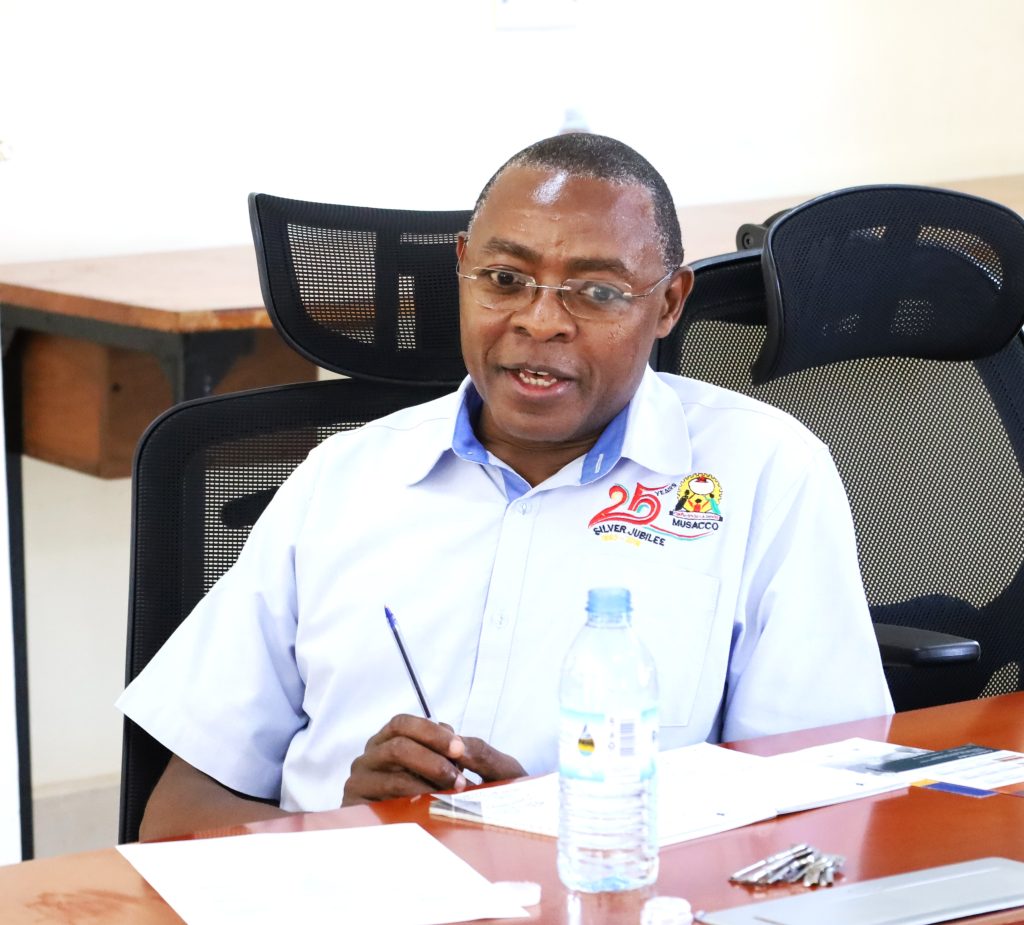
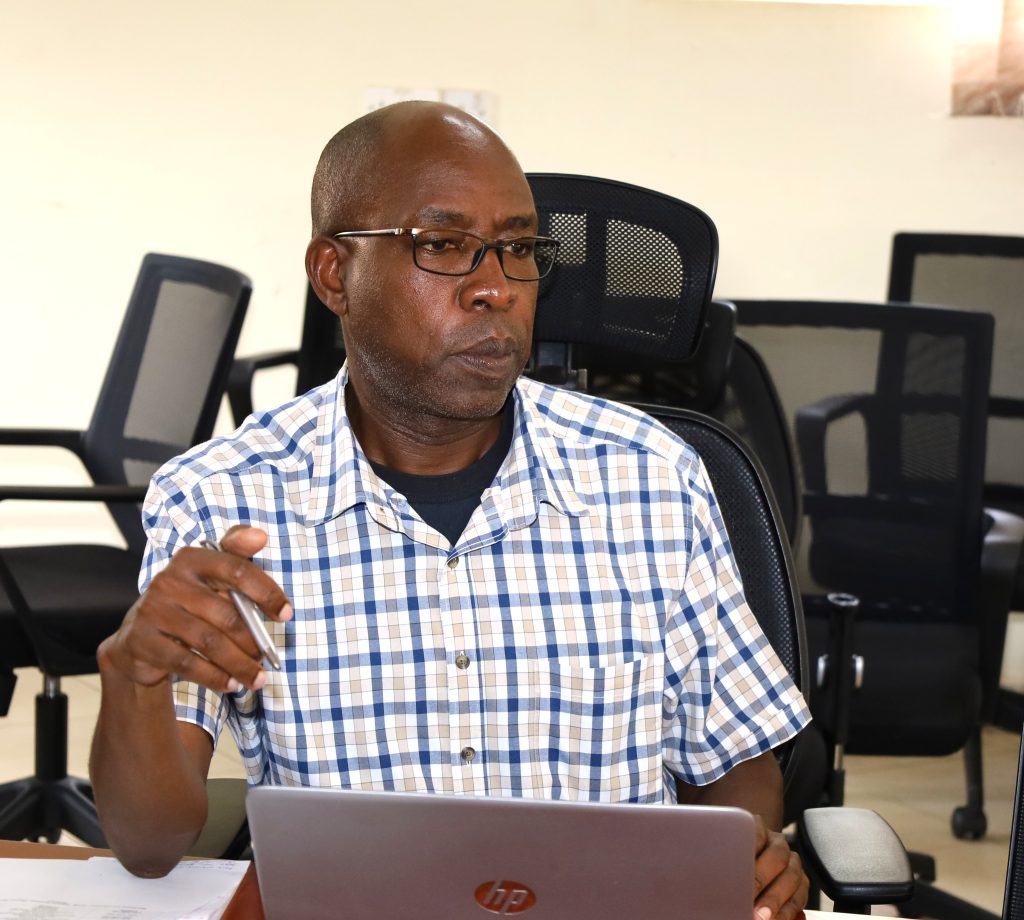
Dr. Benard Luwerekera during the presentation
Dr. Luwerekera’s work measures both the quantitative impact—such as
numbers of volunteers and beneficiaries—and the qualitative impact
captured through memoirs and oral histories. “Many Ugandan leaders today
trace part of their formative experiences to interactions with Peace
Corps volunteers,” he noted.
He revealed plans to explore the emerging idea of a “Reverse Peace
Corps”, where international volunteers could serve in U.S. communities—a
concept that reflects the reciprocity embedded in relationality
studies.
Itah Patience: Fulbright Scholars and Educational Relationality
Researcher Itah Patience presented on Fulbright scholarships as a
channel for educational and cultural relationality between Uganda and
the United States.
Her study explores how Ugandan Fulbright scholars influence academic
culture and build enduring institutional and personal connections after
returning home.
Ms. Itah Patience(R) presenting
“Relationality in the Fulbright experience operates at multiple
levels—individual, institutional, and governmental,” she explained.
“Through teaching, collaboration, and shared research, these scholars
extend the impact of the Fulbright beyond the classroom to national
development and cross-cultural understanding.”
Patience emphasized the importance of academic partnerships as a
criterion for Fulbright success. “One applicant told me she failed her
first interview because she lacked a U.S. contact, but succeeded later
after building professional relationships,” she said. “That shows how
relationality is not just a concept but a lived process.”
Dr. George Okiror: U.S.–Uganda Relations Through Constitutionalism and the Rule of Law
Dr. George Okiror’s paper delves into constitutionalism and the rule of law as a foundation for Uganda–U.S. relations.
Adopting a historical approach, he traces parallels from the Magna
Carta (1215) to Uganda’s 1962 independence, examining how liberal
democratic values have shaped the relationship between the two nations.
Dr. George Okiror presenting on constitutionalism and the rule of law
“Uganda–U.S. relations have always been both issue-driven and
personality-driven,” Dr. Okiror observed. “From the Cold War era through
contemporary debates on democracy, human rights, and governance, each
Ugandan and American leader has influenced the tone and trajectory of
this relationship.”
He highlighted issues such as Cold War politics, independence
movements, democracy promotion, and human rights as pivotal areas of
U.S.–Uganda engagement. “I hope to access U.S. congressional archives to
deepen this analysis and better understand the dynamics of governance
and constitutionalism between our two countries,” he added.
The seminar marked the beginning of a month of active collaboration
between Makerere researchers and Professor McLauchlan. The partnership
is expected to open new avenues for joint research, publications, and
academic exchanges that will enhance the study of U.S.–Uganda relations
under the relationality framework.
About the Great Lakes Centre for the Study of the United States
The Makerere Great Lakes Centre for the Study of the United States was officially launched on March 25, 2025, with support from a startup grant from the United States Mission in Uganda.
The Centre seeks to promote scholarship on U.S. foreign policy,
cultural influence, and international relations, while fostering
academic exchange and collaboration between Ugandan and American
institutions.
Housed within the Department of Political Science and Public Administration, School of Social Sciences, College of Humanities and Social Sciences, the Centre is led by Prof. Paul Omach as Director, assisted by Prof. Apuuli Kasaija, with Dr. Sylvestre Kaweesi serving as the Principal Investigator (PI) in charge of research.
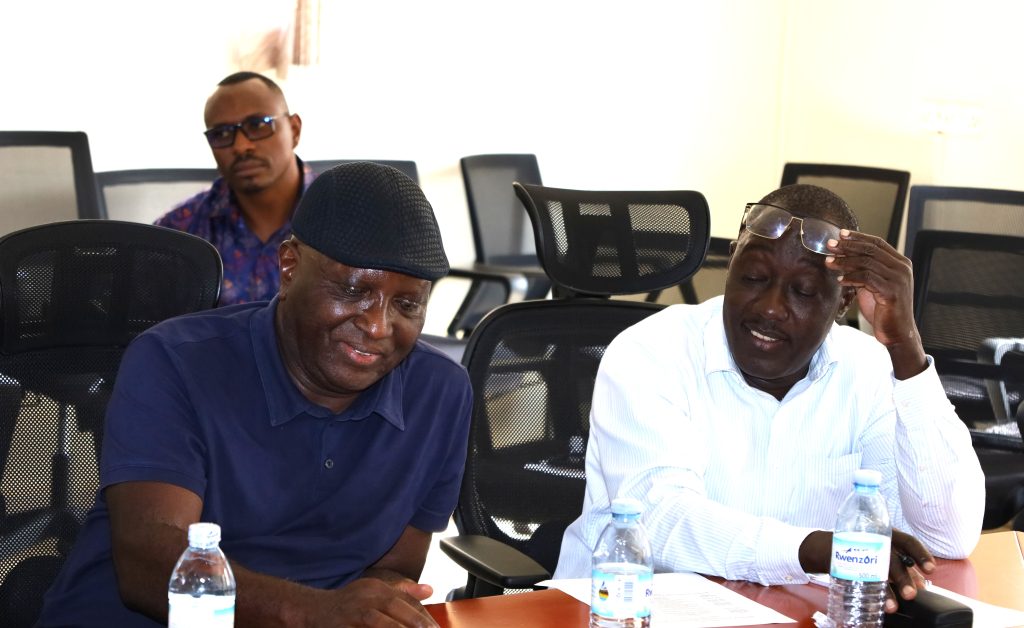
Prof. Kasaija Apuuli and Prof. Paul Omach during the seminar
The Centre’s research program revolves around the concept of “Civilizational Relationality.”
Under this program, six selected researchers are exploring various
themes that interrogate how relations between Uganda and the United
States have shaped different domains of Uganda’s national life since
1945.
Dr. Nicholas Sempijja is studying how American jazz has influenced Ugandan popular music. Other ongoing research includes counter-terrorism cooperation (by Dr. Mafumbo Charlotte and Dr. Kibirige Nakaiza), the Peace Corps’ role in local development (by Dr. Bernard Luwererkera), democracy promotion (by Mr. Bwire Lumumba), and constitutionalism and the rule of law (by Dr. George Okiror).
It was a pleasure to welcome Fulbrighter Prof Stephen Curda (National Louis University) to the Great Lakes Center for the Study of the United States.
Prof. Curda was placed at Busitema University and was working with colleagues there to implement CBE/competency based education. His wife, also a university professor, joined us as well. She delivered guest lectures and workshops at Busitema while here to visit her husband.
The couple were on their way to the airport to head back to the US. We so appreciate their making time to stop by.
We are looking forward to continued cooperation with both Professors Curda! And we wish you a safe and pleasant journey back to the US.
October 9th is Independence Day in Uganda - celebrating Uganda's independence from the United Kingdom in 1962.
When we were meeting with the Honorable Betty Castor -- during my one-on-one meeting with the Center researcher studying the impact of the Peace Corps in Uganda, especially as it relates to education -- I learned that Betty was actually a part of the official United States Delegation to Uganda -- invited by President John F. Kennedy to represent the United States!
On behalf of the United States of America, I congratulate the people
of Uganda on the 63rd anniversary of Uganda’s independence on October
9. Together, we have worked to strengthen regional security, promote
bilateral trade, and enhance global public health.
We extend our best wishes for the people of Uganda and look forward to building a stronger partnership in the coming year.


.jpg)


.jpg)


.jpg)


